Geographic farming is one of the oldest lead generation strategies in real estate, and it still works. But the agents who are actually winning neighborhoods in Brooklyn right now are not running the same playbook from 2015. They are layering direct mail with Instagram geotargeting, combining door-knocking with hyperlocal content, and tracking every dollar they spend to make sure the math works.
If you are serious about owning a neighborhood in Brooklyn, here is how to do it from scratch in 2026.
Choosing the Right Farm Area
This is where most agents get it wrong. They pick a neighborhood because they like it, or because it has expensive homes. Neither of those is a good enough reason.
Here is what actually matters when selecting your farm area in Brooklyn:
- Transaction volume. You need enough annual transactions to make farming worthwhile. Pull the last 12 months of closed sales from StreetEasy or ACRIS for your target area. If a zone has fewer than 30-40 transactions per year, the math gets difficult. Neighborhoods like Park Slope, Bed-Stuy, Crown Heights, Bushwick, and Williamsburg tend to have strong volume. Smaller pockets like Cobble Hill or Boerum Hill may require you to combine adjacent blocks.
- Competition density. Search your target area on StreetEasy and Zillow. How many agents are actively listing there? If one agent already has 30% or more of the listings, you are fighting uphill. Look for neighborhoods where listings are spread across many agents - that fragmentation is your opportunity.
- Commute from your home or office. This sounds minor, but farming requires showing up. Repeatedly. If your farm is a 45-minute subway ride away, you will find excuses not to go. Pick somewhere you can reach in 20 minutes or less.
- Personal connection. Do you already know anyone in the area? Have you sold there before? Even one past client in the neighborhood gives you a foothold.
- Property type alignment. If you specialize in co-ops, farm a co-op-heavy area. If you love working with brownstone buyers, target blocks in Bed-Stuy or Fort Greene where those properties dominate.
Aim for a farm of 500-800 homes. Smaller than that and there is not enough opportunity. Larger and you cannot maintain the personal touch that makes farming work.
Direct Mail Is Not Dead, But It Has to Be Good
Let me be blunt: the postcards most agents send are garbage. A headshot, a “Just Sold” headline, and a phone number. Straight into the recycling bin.
Direct mail still works in Brooklyn, but only if it provides genuine value. Here is what actually gets kept:
- Hyperlocal market reports. A one-page breakdown of what sold on their specific blocks in the last quarter, with actual numbers. Homeowners are obsessed with what their neighbors’ places sold for. Pull this data from ACRIS or your MLS and present it cleanly.
- Neighborhood event calendars. A seasonal mailer listing upcoming events - the Prospect Park food truck rally, the Fort Greene flea market dates, the local school fundraiser. This positions you as someone who actually knows the neighborhood.
- Home value estimates. Not the generic Zillow Zestimate. A personalized estimate based on recent comps, sent to a specific block. Include a QR code that leads to a landing page where they can request a detailed analysis.
Send mail consistently - monthly or bimonthly - for at least 12 months before you judge results. One postcard does nothing. Twelve postcards build recognition.
Budget reality: expect to spend $1.50-$2.50 per piece for quality printing and postage. For a 600-home farm, that is $900-$1,500 per month. Yes, it is an investment. We will talk about ROI tracking later.
Door-Knocking Scripts That Work in Brooklyn
Door-knocking in Brooklyn brownstone neighborhoods is a different animal than knocking in the suburbs. People are more guarded, more pressed for time, and more likely to be renters who cannot refer you to the owner.
Here is a script framework that works:
Opening (keep it under 10 seconds): “Hi, I am [Name] with [Brokerage]. I work specifically in this neighborhood - I am not selling anything. I just wanted to drop off a quick market update for your block. [Hand them the report.] Have a great day.”
That is it. Do not pitch. Do not ask if they are thinking of selling. The goal of your first knock is to not be annoying. Leave the market report, smile, and move on.
Second visit (4-6 weeks later): “Hi again - I dropped off a market update a few weeks back. I had a quick question: do you know if any of your neighbors are thinking about selling? I have buyers specifically looking on this block.”
This second visit is where conversations start. People remember you from the first visit. They are more willing to talk. And the question about neighbors is non-threatening because you are not asking about their home.
Practical tips for Brooklyn specifically:
- Knock on Saturday mornings between 10 AM and 1 PM. Weekday evenings are hit-or-miss because of commute schedules.
- Brownstones with garden-level apartments often have separate entrances - knock on both.
- If a building has a doorman, do not try to get past them. Instead, befriend them. Doormen know everything about who is moving.
- Bring a small notepad. After each block, jot down notes: who answered, what they said, any details you noticed. This information is gold for follow-up.
Sponsoring Local Events and Community Involvement
Brooklyn runs on community. Block parties, stoop sales, school fundraisers, little league teams, cultural festivals - there are events happening every weekend in every neighborhood.
Sponsoring these events does two things: it puts your name in front of residents, and it signals that you are invested in the community, not just looking to collect commissions.
Tactics that work:
- Stoop sales and block parties. Offer to sponsor the permit (usually $25-$50 from the city) and provide refreshments. Put up a small banner. Show up and actually hang out. Do not set up a booth with business cards - just be a person.
- School and youth sports sponsorships. Many Brooklyn schools and youth leagues will put your name on jerseys or event programs for $200-$500 per season. Parents see your name every week.
- Partner with local businesses. Talk to the coffee shop owner about putting a small stack of your market reports by the register. Offer the dry cleaner’s customers a free home valuation card they can pick up at the counter. In return, promote these businesses in your newsletter and social media. It is mutual benefit.
- Host your own events. A free “Brooklyn Homebuyer 101” seminar at the local library or community center costs almost nothing to organize and positions you as an expert. Even if only 8 people show up, those 8 people now know you.
Instagram Geotargeting and Digital Farming
This is where modern farming separates itself. You can now layer digital ads on top of your physical farming efforts so that the same people who get your mailer also see your face on Instagram that week.
Here is the playbook:
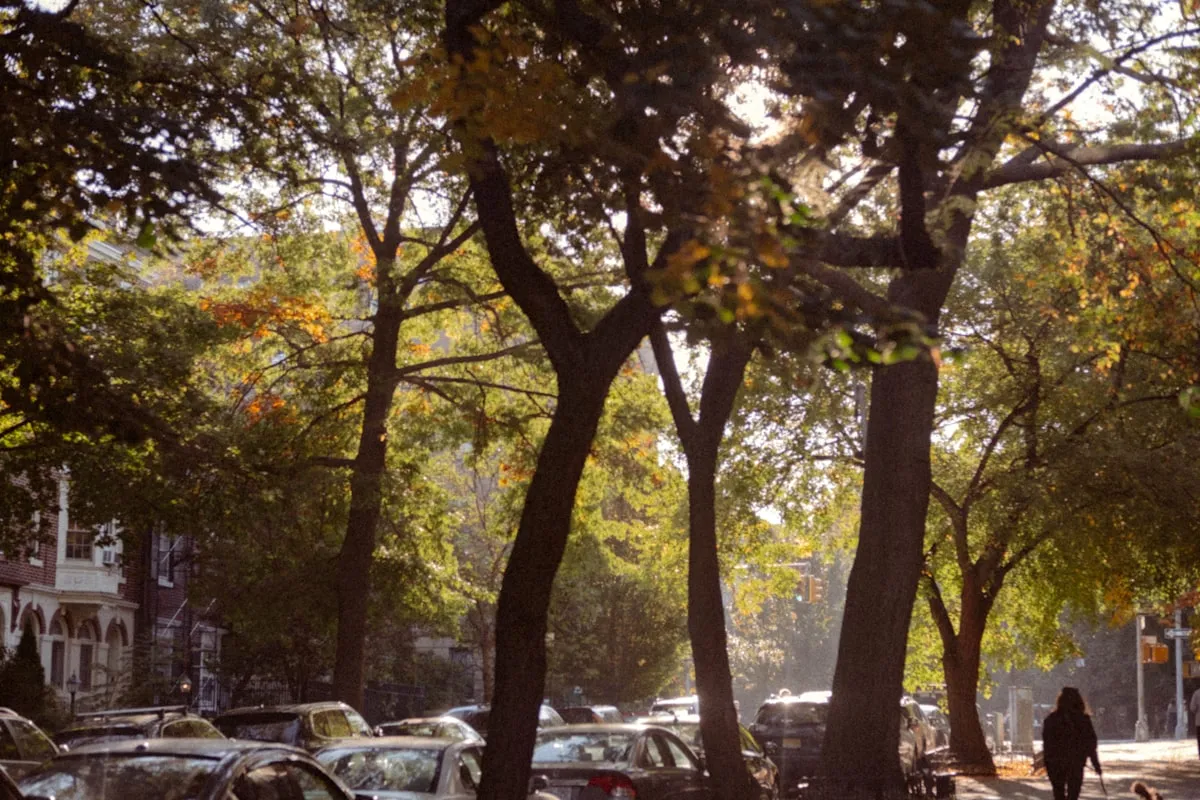
- Create hyperlocal content. Post about your specific farm neighborhood - not “Brooklyn real estate” in general. Show the tree-lined streets of your target blocks. Feature a local restaurant. Walk through a property you just listed on that street. The more specific, the better.
- Use Instagram and Facebook geotargeted ads. You can target ads to people within a 1-mile radius of a specific address. Set your farm area as the target zone and run ongoing awareness ads - not “Call me to sell your home” ads, but valuable content: market updates, neighborhood highlights, just-sold results.
- Budget: $300-$500/month is enough to maintain consistent visibility in a small geographic area. You are not trying to reach millions of people. You are trying to reach the same 500-800 households repeatedly.
- Join neighborhood Facebook groups. Bed-Stuy, Crown Heights, Park Slope - they all have active Facebook groups. Do NOT join and immediately start posting listings. Instead, be helpful. Answer questions about local zoning, recommend contractors, share your knowledge. Over weeks and months, people start to see you as the real estate person in the group.
- Nextdoor is another platform that is hyperlocal by design. Claim your agent profile and participate in discussions. When someone asks “Does anyone know a good real estate agent?” you want three of your past neighbors tagging you.
Creating Hyperlocal Market Reports
I mentioned market reports in the direct mail section, but they deserve their own discussion because they are your single most powerful farming tool.
A good hyperlocal market report covers:
- Number of homes sold in the last quarter in your specific farm area
- Average and median sale price, with comparison to the prior quarter
- Average days on market
- List-to-sale price ratio (are homes selling above or below asking?)
- Notable sales (the brownstone on Hancock Street that went for $2.4M, the co-op on Eastern Parkway that sold in 6 days)
- Inventory levels and what that means for homeowners considering selling
Where to get the data: ACRIS (NYC’s public property records), your MLS, StreetEasy’s data tools, and PropertyShark. Cross-reference to make sure your numbers are accurate.
Format matters. Do not send a dense spreadsheet. Design a clean one-page PDF - Canva has templates that work well for this. Include your branding but keep it subtle. The data should be the star, not your headshot.
Distribute this report everywhere: direct mail, email, social media, your website, and printed copies left at local businesses. Consistency is key - quarterly at minimum.
Tracking Your Farming ROI
If you are spending $1,500 per month on farming (mail, ads, events, sponsorships), that is $18,000 per year. You need to know whether it is working.
Track these metrics:
- Leads generated from the farm area (inbound calls, website visits from QR codes on mailers, DMs on social media from farm residents)
- Listing appointments booked from farm leads
- Listings won in the farm area
- Commission earned from farm-area transactions
Use a CRM (Follow Up Boss, KVCore, or even a well-organized spreadsheet) and tag every lead with its source: “Farm - Direct Mail,” “Farm - Door Knock,” “Farm - Instagram Ad,” “Farm - Facebook Group.”
Here is the math that makes farming work: if the average Brooklyn home sale generates a $15,000-$25,000 commission, you need just one to two farm-sourced transactions per year to make $18,000 in farming expenses profitable. Two transactions puts you solidly in the green. Three or more means the farm is a money machine.
How Long Before Farming Pays Off
This is the part nobody wants to hear: farming takes 6-18 months before you see your first transaction from it.
The typical timeline:
- Months 1-3: You are invisible. Nobody knows who you are. Keep showing up.
- Months 4-6: People start to recognize your name from the mailers and your face from the door-knocking. You might get your first inbound call - usually someone asking for a home value estimate.
- Months 7-12: If you have been consistent, you should have a pipeline forming. Listing appointments start happening. Your first farm-sourced transaction closes.
- Months 12-18: The compound effect kicks in. You now have “Just Sold” results in the neighborhood to promote. Neighbors saw your sign. Referrals from the neighborhood start coming in without you asking.
- Year 2 and beyond: You are the neighborhood agent. Listings come to you because everyone knows you. This is where the real money is - not in the first year, but in years two through five.
The agents who fail at farming are the ones who quit at month four because they have not closed a deal yet. Farming is not a lead generation tactic - it is a business-building strategy. Treat it like an investment with a 12-month time horizon, and the returns will follow.
Brooklyn is a city of neighborhoods, and every neighborhood needs an agent who truly knows it. That agent can be you, but only if you commit to the process and show up consistently. Pick your farm, build your system, and give it time. The results will come.