Photographing small apartments in New York City is one of the most common challenges in real estate photography. The average Manhattan studio measures just 550 square feet, and a typical Brooklyn one-bedroom runs between 650 and 750 square feet. That is not a lot of room to work with. But with the right techniques, gear, and staging approach, you can make even the tightest spaces look inviting, honest, and genuinely appealing to online buyers.
This guide covers everything from lens selection and camera angles to staging strategies and ethical considerations. Whether you are an agent trying to DIY your listing photos or a photographer looking to sharpen your small-space skills, these tips will help you deliver results that get clicks and showings.
Choose the Right Lens (And Avoid the Wrong One)
Your lens choice makes or breaks small apartment photography. On a full-frame camera, a 16-17mm wide-angle lens is the sweet spot for tight NYC interiors. It captures enough of the room to give viewers a sense of space without creating the warped, funhouse effect that cheaper ultra-wide lenses produce.
Anything wider than 16mm starts introducing noticeable barrel distortion, where straight lines curve outward at the edges of the frame. This effect makes rooms look bigger than they actually are, which might seem like a benefit until buyers show up for a viewing and feel deceived. A 2023 study from the National Association of Realtors found that 83% of buyers said photo quality was “very important” in their home search, but misleading photos ranked as one of the top frustrations.
If you are shooting on a crop-sensor camera, a 10-12mm lens gives you roughly the same field of view. Avoid fisheye lenses entirely. They may capture more of the room, but the distortion is immediately obvious and makes your listing look unprofessional.
Shoot From Corners and Doorways
Where you stand matters just as much as what lens you use. In a small apartment, shooting from corners and doorways is the single most effective way to maximize the perceived depth of a room. Standing in a corner lets you capture two walls and the floor, which gives the viewer’s brain enough visual information to construct a mental model of the space.
Doorways are equally powerful because they frame the room naturally and add a sense of depth. When you shoot through a doorway, you create foreground, middle ground, and background layers in the image. This layering tricks the eye into perceiving more space than actually exists, without misrepresenting the room.
For studios and one-bedrooms under 700 square feet, plan on shooting from at least 3 to 4 angles per room. In a typical 550-square-foot Manhattan studio, that means 12 to 16 total shots to give buyers a comprehensive understanding of the layout. Position your tripod at roughly chest height (about 4 feet) for the most natural perspective.
Use Vertical Compositions for Narrow Rooms
Most real estate photography is shot in landscape orientation. But in narrow NYC apartments, particularly galley kitchens, hallways, and railroad-style layouts, vertical (portrait) compositions can be far more effective. A vertical frame captures the floor-to-ceiling height of a space, which emphasizes volume rather than width.
This technique works especially well in kitchens. The average NYC apartment kitchen is just 50 to 70 square feet, which is barely enough room to stand in, let alone photograph. A vertical shot from the doorway can capture the countertops, upper cabinets, and ceiling in a single frame, making the kitchen feel taller and more open.
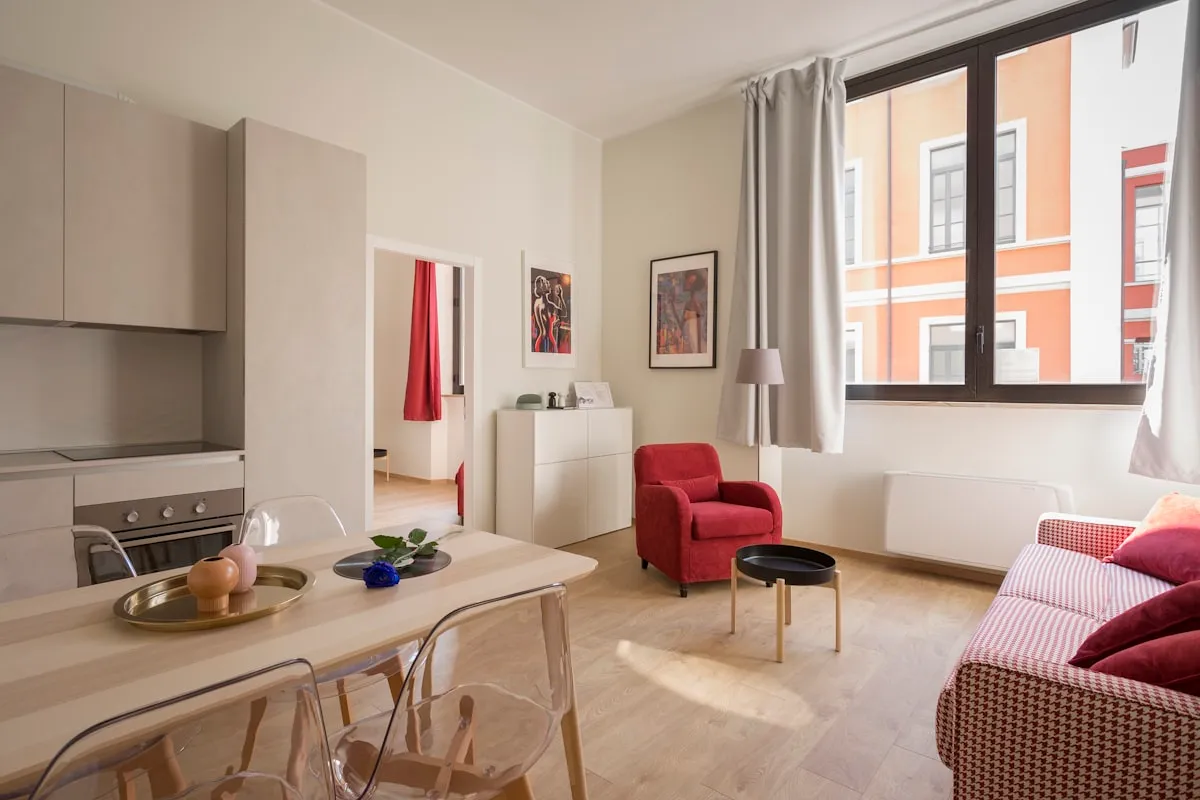
Another trick: include windows in your compositions whenever possible. Windows add depth by showing the world beyond the apartment walls. Even a small window with a view of a brick wall or a neighboring building gives the eye somewhere to travel, which makes the room feel less boxed in. In New York, where roughly 72% of apartments face other buildings or airshafts, this technique is essential.
Stage Small Spaces: Less Is Always More
Staging is where many agents and photographers lose the plot in small apartments. The instinct is to fill the space with furniture and decor to make it feel “homey.” In a small apartment, this approach backfires badly. Every extra item shrinks the perceived square footage.
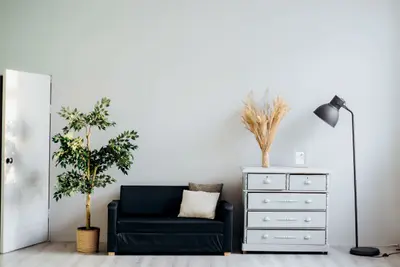
The golden rule for staging compact spaces: remove at least 50% of the furniture that would normally be in the room. A studio should have a bed, one nightstand, and maybe a small desk or reading chair. A living area needs a sofa, a coffee table, and one accent piece. That is it. If you are working with professional virtual staging, you have even more control over what goes in and what stays out.
Use mirrors strategically to create the illusion of depth. A large mirror on a wall opposite a window effectively doubles the perceived space and bounces natural light deeper into the room. Light-colored linens, throws, and pillows in whites, creams, and soft grays reflect light instead of absorbing it, which makes rooms feel airier.
Remove all personal items, including family photos, refrigerator magnets, toiletries, and anything on the kitchen counter. In a 650-square-foot Brooklyn one-bedroom, even a toaster on the counter can make the kitchen feel cluttered in photos.
Master Lighting in Dark, Tight Interiors
Lighting is arguably the biggest challenge in small NYC apartment photography. Many units, especially in older Brooklyn brownstones and pre-war Manhattan buildings, have limited natural light. North-facing apartments, ground-floor units, and rooms facing airshafts can be genuinely dark, even at midday.
Start by turning on every light in the apartment. Replace any warm-toned bulbs with daylight-balanced bulbs (5000-5500K) so your artificial light matches the window light. This prevents the mixed-color-temperature problem where part of the room looks orange and part looks blue.
For kitchens and bathrooms, which are almost always the darkest rooms in a NYC apartment, bring portable LED panels. A small, battery-powered LED panel placed on the counter and bounced off the ceiling can transform a cave-like kitchen into an inviting space. Bounce flash off white ceilings (never direct flash, which creates harsh shadows and makes spaces feel sterile) for an even, natural-looking fill.
According to a Redfin analysis, listings with bright, well-lit photos sell up to 32% faster than those with dark or poorly lit images. In small apartments, where every square foot counts, good lighting is not optional. It is essential. For the best results, consider professional photography services that include proper lighting equipment.
Edit With Honesty: Correct Distortion, Keep It Real
Post-processing is where you refine your small-apartment images, but it is also where ethical lines can get blurred. Start with the technical corrections: fix barrel distortion using your editing software’s lens correction tools, and straighten all vertical lines so walls, door frames, and windows are perfectly upright. These corrections make images look polished and professional without altering the space itself.
Adjust exposure and white balance to ensure the photos accurately represent what the apartment looks like in person. Brighten shadows slightly to open up dark corners, but do not push it so far that the apartment looks like it has floor-to-ceiling windows when it actually has two small ones.
What you should never do: do not use extreme HDR processing that makes interiors look surreal. Do not stretch or warp images to make rooms appear wider. And do not composite multiple exposures in a way that removes structural elements like columns or low ceilings. Over 60% of buyer complaints about listing photos relate to the property looking different in person than it did online. Honesty in editing builds trust, and trust generates offers.
Compensate With Amenities and Neighborhood Shots
Here is a strategy that many photographers and agents overlook: when the apartment itself is small, expand the visual story beyond the four walls. Building amenities and neighborhood context can dramatically increase a listing’s appeal, especially for studios and one-bedrooms where the interior photo set is naturally limited.
Photograph the building’s lobby, rooftop (if accessible), laundry room, gym, courtyard, and any shared outdoor space. For Brooklyn listings, capture the tree-lined street, the nearest park, local cafes and restaurants, and the subway entrance. These contextual shots help buyers understand the lifestyle, not just the apartment.
According to StreetEasy data, listings with 15 or more photos receive 2.5 times more saves than those with fewer than 10. In a small apartment, you might only get 8 to 10 strong interior shots. Adding 5 to 7 amenity and neighborhood photos brings your total into that high-engagement range. Check out our guide on preparing a home for a photo shoot for more tips on getting the space ready before the camera comes out.
What NOT to Do: The Ethics of Small-Space Photography
Let’s address the elephant in the (very small) room. There is a fine line between making a space look its best and making it look like something it is not. Ethical real estate photography means presenting the property honestly while highlighting its genuine strengths.
Do not use fisheye lenses or extreme wide angles that make a 400-square-foot studio look like a loft. Do not shoot from angles that hide structural issues like low ceilings, angled walls, or oddly placed columns. Do not remove items in post-production that are permanent fixtures (like radiators or exposed pipes) unless you clearly disclose the editing.
The practical reason for honesty is simple: misleading photos waste everyone’s time. Buyers who feel deceived at a showing will not make an offer. In fact, agents who consistently use accurate, high-quality photos report 20% fewer canceled showings than those who rely on exaggerated imagery. The goal is to attract the right buyers, the ones who will genuinely love the space, not just anyone who will click.
For the strongest results in challenging small spaces, consider combining professional photography with virtual staging to show the space’s potential without misleading buyers about its size. With the right approach, even the smallest NYC apartment can look like home.